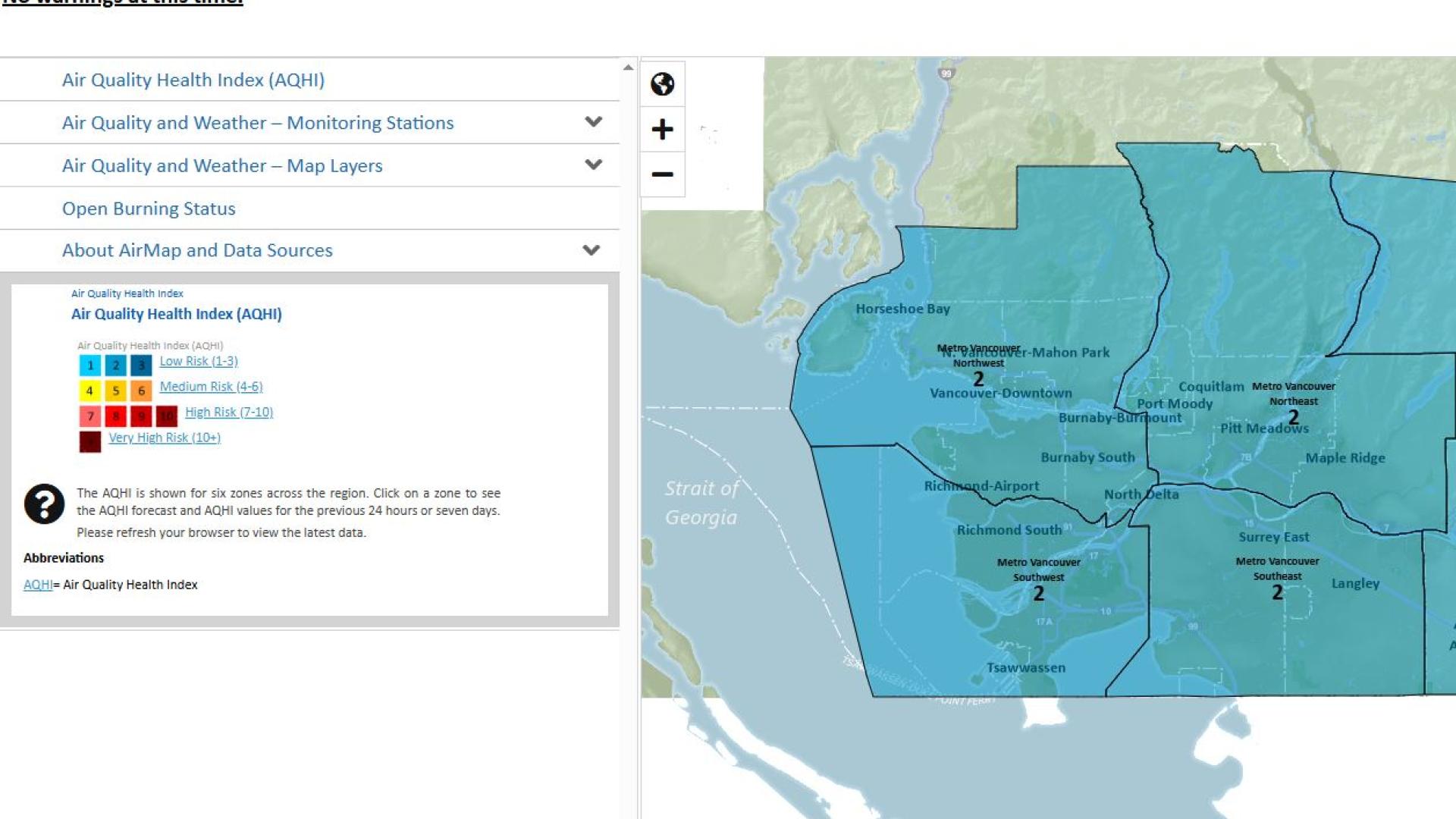
The City of New Westminster is located within the Lower Fraser Valley (LFV) airshed, a shared regional and international airshed that stretches from Horseshoe Bay in the west to Hope in the east, bounded by the Coast Mountains to the north and the Cascade Mountains to the south. Metro Vancouver Regional District is responsible for air quality monitoring in New Westminster.
Why Air Quality Matters
The air we breathe affects our health and well-being. Air pollutants can come from many sources, including burning fossil fuels for transportation and home/building heating, industrial activities and manufacturing, wildfire smoke, and more. Breathing polluted air can make it harder to breathe and can worsen heart and lung problems. While poor air quality can affect everyone, some people are more at risk than others.
Who is most at risk?
- Children and babies
- Older adults
- People with heart or lung problems, such as asthma
- People with other health conditions
- Pregnant people
Air Quality Monitoring
In 2016, an air quality monitoring station was added by Metro Vancouver in the Sapperton neighbourhood to provide better measurements of the levels of air contaminants occurring in New Westminster. The addition of this station followed an extensive air quality monitoring study (PDF) conducted by Metro Vancouver during 2009-2010 to gain a better understanding of the air contaminant dispersion and impact of vehicle emissions on local air quality.
Anti-Idling
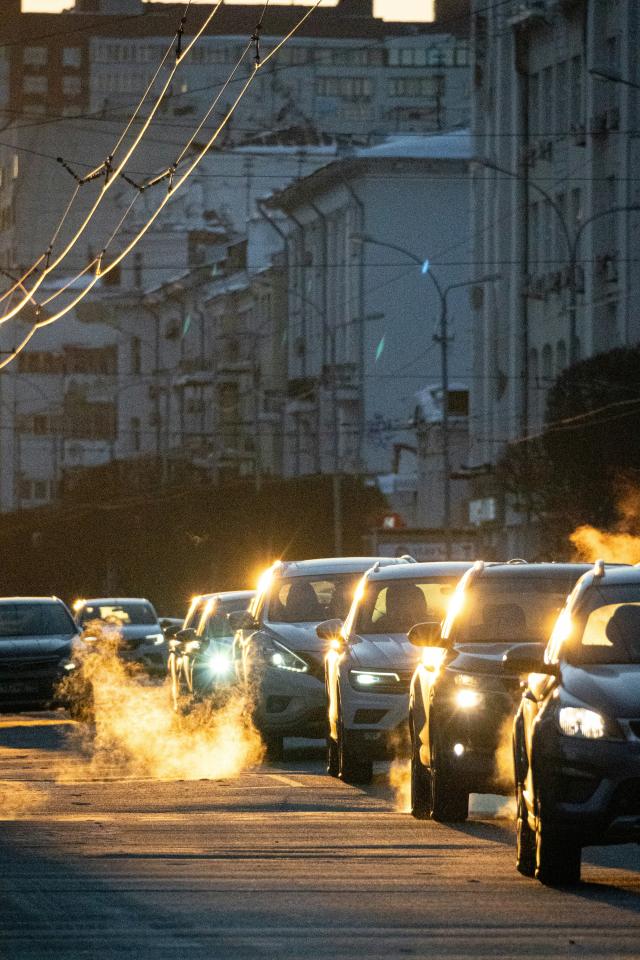
The millions of Canadians who drive vehicles every day can take actions to help save fuel and money, and reduce tailpipe emissions that contribute to climate change and air pollution. Some actions include, avoiding jackrabbit starts, maintaining proper tire pressure, carefully planning trips by combining errands, or even walking or taking a bus instead of the car. But one of the easiest actions that motorists can take is to avoid unnecessary idling.
Many people are unaware of these basic idling-related facts:
- With today's engines, the best way to warm it up is to drive it - assuming your windows are clear. Modern engines need less than 30 seconds of warm-up idling.
- 10 seconds of idling uses more fuel than restarting your engine.
- Idling can actually damage your engine components and reduce engine life by 20%.
- Reducing idling by just 10 minutes a day saves of $70 per year in fuel AND reduces greenhouse gas emission by 1/4 tonne a year!
As part of the City's commitment to protect the natural environment and reduce greenhouse gas emissions, an anti-idling bylaw was adopted by New Westminster City Council in October 2008.
According to the bylaw, idling for more than three minutes is prohibited on city streets. Please review the Anti-idling Bylaw (PDF) for more information and the exemptions to the rule.
Wildfire Smoke
With climate change leading to more frequent and intense forest fires, New Westminster and the surrounding area are experiencing more smoky days. The City has created a webpage with Clean Air Locations, smoke health impacts, and helpful resources: