Climate change is a global phenomenon that has significant local impacts including:
extreme weather conditions,
intense droughts,
heat waves,
severe fires,
rising sea levels,
flooding,
storms, and
declining biodiversity.
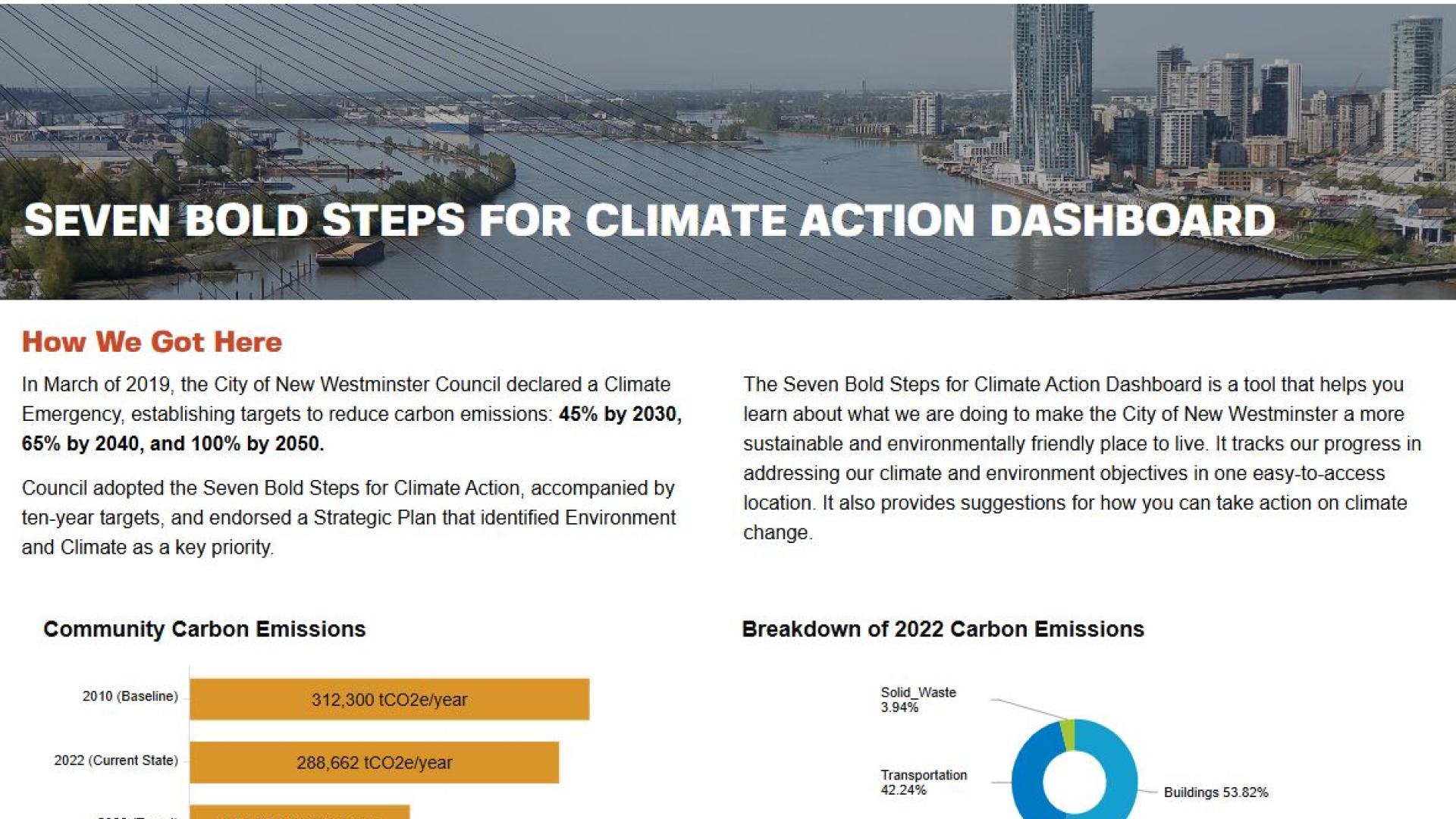
In 2019, Council declared a climate emergency and committed to taking bold action to achieve the greenhouse gas reductions required to keep global temperature increases below 1.5°C.
Council developed the Seven Bold Steps for Climate Action with the goal of moving New Westminster towards a zero carbon future by 2050.
Our Progress: Seven Bold Steps for Climate Action Dashboard
The Seven Bold Steps were created to help the City of New Westminster move towards a zero carbon future by 2050. The Bold Steps are:
Bold Step 1: Carbon Free Corporation. The City of New Westminster will reduce its overall carbon footprint and will strive to achieve net zero carbon emissions by 2030.
Bold Step 2: Car Light Community. Accelerate the Master Transportation Plan mode split target: 60% of all trips within the City will be by sustainable modes of transportation (walk, transit, and bike) by 2030.
Bold Step 3: Carbon Free Homes and Buildings. Carbon emissions from all homes and buildings in the community will be reduced significantly. By 2030, all new and replacement heating and hot water systems will be zero emissions.
Bold Step 4: Pollution Free Vehicles. By 2030, 50% of kilometers driven by New Westminster registered vehicle owners will be by zero emission vehicles.
Bold Step 5: Carbon Free Energy. The City of New Westminster will invest in a smart electrical grid in order to accommodate the required rapid conversion to building and vehicle electrification.
Bold Step 6: Robust Urban Forest. New Westminster’s Urban Forest Canopy cover will be increased to 27% by 2030 to support the removal of carbon pollution.
Bold Step 7: Quality People-Centred Public Realm. A minimum of 10% of today’s street space that currently only serves motor vehicles, excluding transit, will be reallocated for sustainable transportation or public gathering by 2030. The natural environment will be integrated with the public realm.
The City of New Westminster has created a public online dashboard to show our progress towards reaching the Seven Bold Step targets.
The dashboard lets you explore the City's climate progress with clear, up-to-date information that's easy to navigate. It shows how climate action connects to daily life and makes it easy to find key updates. You can track indicators, see where progress is being made, where more work is needed, and find ways to get involved. You can also learn about projects underway that support each of the Bold Steps.
The Local Government Climate Action Program (LGCAP) was created in 2022 to provide provincial funding to Local Governments and Modern Treaty Nations. The funding supports local climate action that reduces greenhouse gas emissions and prepares communities for the impacts of a changing climate.
As part of the program, local governments are required to report on their corporate greenhouse gas emissions and on actions taken at the corporate and community levels to reduce greenhouse gas emissions. To learn more about LGCAP-funded climate action in New West, please read the below LGCAP reports.
The City of New Westminster is committed to protecting nature and taking action on climate change. The below plans and strategies show how the City will achieve its climate and environment goals.
As part of the City’s ongoing efforts to reduce its impact on climate change, the City endorsed an updated Community Energy and Emissions Plan (CEEP 2050) in 2022.
This Plan provides a roadmap to approaching net zero greenhouse gas emissions by 2050. The complete CEEP can be read here, and is organized into 5 key areas, as presented below.
Transportation – supporting sustainable transportation such as biking, eMicromobility (e-bikes, etc.), and electric vehicles;
Buildings – retrofitting existing buildings and requiring new buildings to be built to high energy efficiency standards that helps reduce emissions;
Energy – supporting energy conservation, district energy, and renewable energy;
Waste and circular economy – reducing waste and embracing circular economy principles, which involves reusing, sharing, repairing, refurbishing and recycling existing materials for as long as possible; and
Natural systems – preserving and enhancing natural areas and the urban tree canopy, and increasing the use of green infrastructure.
Image
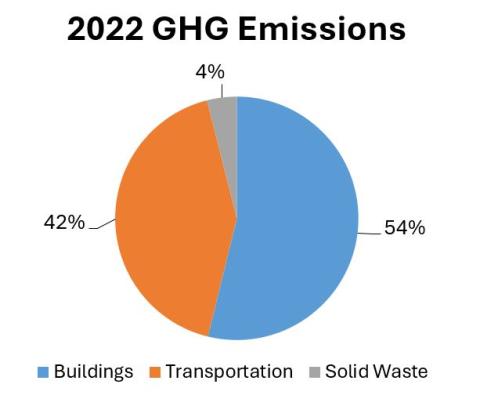
The biggest opportunities for GHG reduction are in the transportation and buildings sectors. Recommended actions in these areas look to ensure we:
reduce energy demand first,
improve efficiency, and
ultimately switch fuel sources to low carbon sources.
Ensuring actions are implemented in an equitable way will also be critical to ensuring the transition to a low-carbon community benefits everyone.
The Environmental Strategy and Action Plan (ESAP) (adopted September 17, 2018) is the City’s environmental master plan which includes a vision, a set of goals, and actions to be implemented over the next 10 years and beyond in four priority areas:
Energy, Emissions & Climate Change
Buildings, Sites & Urban Design
Water, Waste & Materials
Natural Areas & Habitat
The City of New Westminster’s e-Mobility Strategy was adopted by Council on June 27, 2022. The Strategy focuses on accelerating adoption of electric transportation options, such as electric vehicles and e-bikes. It addresses Bold Steps 2 and 4 of the City's Seven Bold Steps, Car Light Community, and Pollution Free Vehicles.
The strategy objectives are:
Incorporate eMicromobility into City planning and outreach
Advance supportive eMicromobility policies
Enhance e-bike accessibility
Improve access to secure public and private e-bike parking
Improve access to EV charging in public spaces, at home and at work.
Support affordability of electric vehicles
Proactively manage electricity grid impacts of EV charging
Successfully implement the eMobility Strategy.
The main goal of the Strategy is to reduce transportation-related pollution while creating a healthier, more connected, and sustainable New Westminster.
The City of New Westminster’s Corporate Energy and Emissions Reduction Strategy 2020 (CEERS 2020) contains actions to help the City improve its energy efficiency and reduce its greenhouse gas emissions to achieve its goal of becoming carbon neutral by 2050. CEERS 2020 recognizes the evolving public policy environment in which the City operates, including an increased urgency for action at the international, national, provincial and local levels.
CEERS aligns with Council’s Climate Emergency Declaration of 2019 and associated greenhouse gas (GHG) reduction targets of 45% by 2030, 65% by 2040, and 100% by 2050. The main objectives of CEERS are to:
Maximize energy efficiency
Build new buildings to net-zero or net-positive energy and emissions
Use local renewable, low-impact energy sources
Transition to an efficient and low-carbon fleet
Prioritize active and shared transportation for staff
Minimize energy and emissions impacts of all corporate assets
Partner externally to advance common energy and emissions objectives
The CCARP is a 25-year strategic plan that guides how New Westminster will prepare for and respond to the effects of climate change. It focuses on solutions that meet the needs of our community and helps us use resources wisely to build a safer, healthier, and more resilient New Westminster for everyone.