
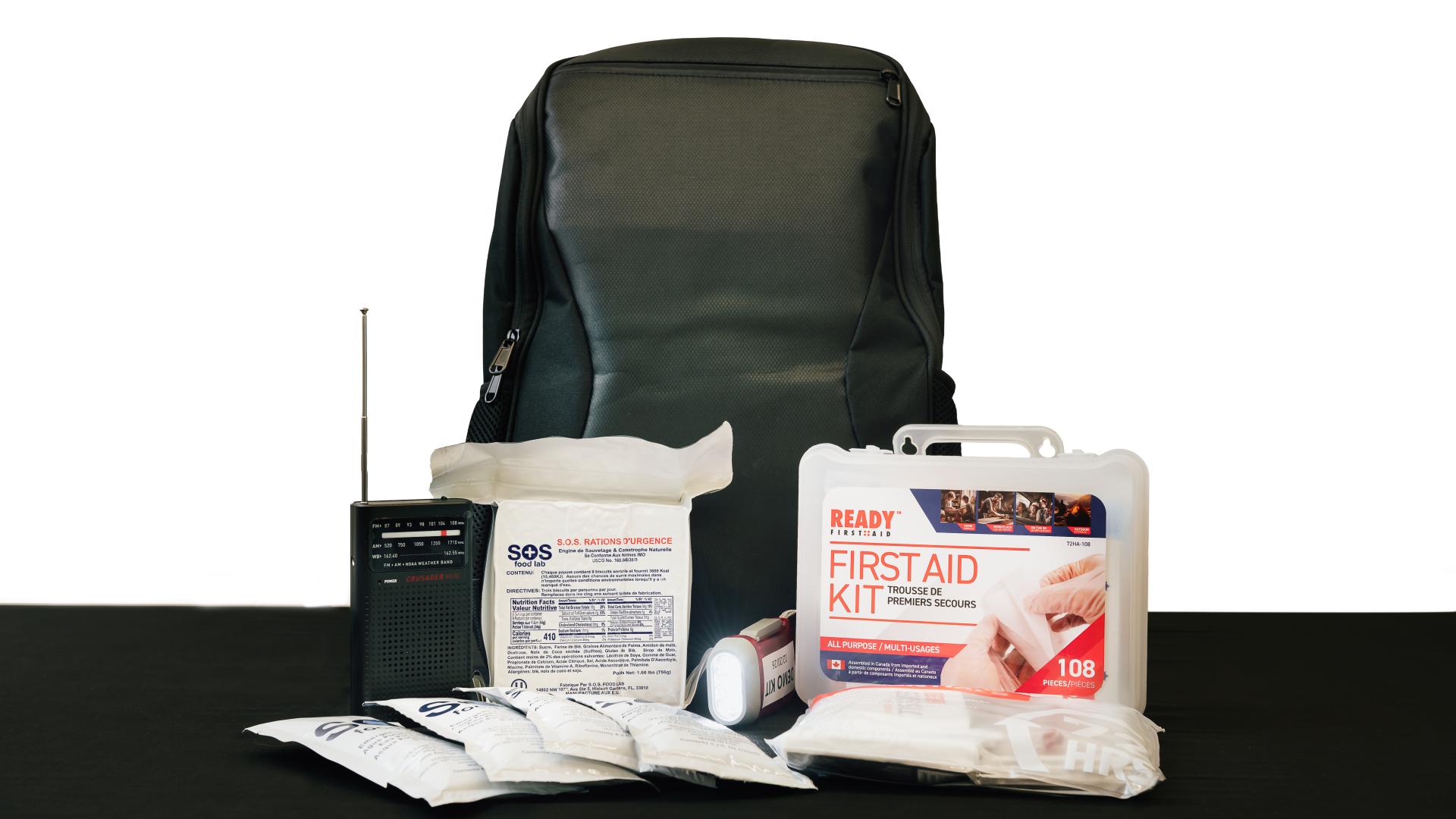
Emergencies can happen when we least expect them, and often when household members are not together. Don't let your household be caught without a plan. A household emergency plan can help to save lives! Residents are encouraged to be prepared for at least 72 hours following an emergency.
Evacuations - What You Need To Know
Annually the Emergency Management Office is training with residents in the community to help provide annual evacuation drills in their buildings. During this training information is reviewed about the hazards that are in their area and how they can effectively evacuate.
If a threat of an emergency was to occur, the City of New Westminster will follow the following steps to shelter in place or evacuate.
Shelter In Place
Sheltering-in-place (SIP) is the practice of going or remaining indoors during an outdoor release of a hazardous substance. Shelter-in-place is the reverse of an evacuation. Sheltering-in-place uses the structure of the building to protect you. The purpose of sheltering-in-place is to reduce the movement of air into and out of the building until either the hazard has passed or other emergency actions can be taken.
Business Continuity
Businesses are the backbone of our local economy. If a business fails in an emergency, then the households that rely on that business will have a difficulty recovering from the emergency. By taking some steps ahead of time, businesses can be better prepared to survive and recover after an emergency, thus making the community and the economy more stable.